The Slow Erosion of Canadian Journalism (And Why It Should Scare You)
/Something is happening to journalism in Canada and too few people are paying attention. Not because they don't care. But because the very thing that would normally tell them about it is part of the problem.
I co-host a podcast called Reputation Town with my friend and fellow communications pro John Perenack. In our most recent episode, we spent a good chunk of time on two stories that, taken together, paint a troubling picture of where Canadian journalism is headed.
The Tina Yazdani Story
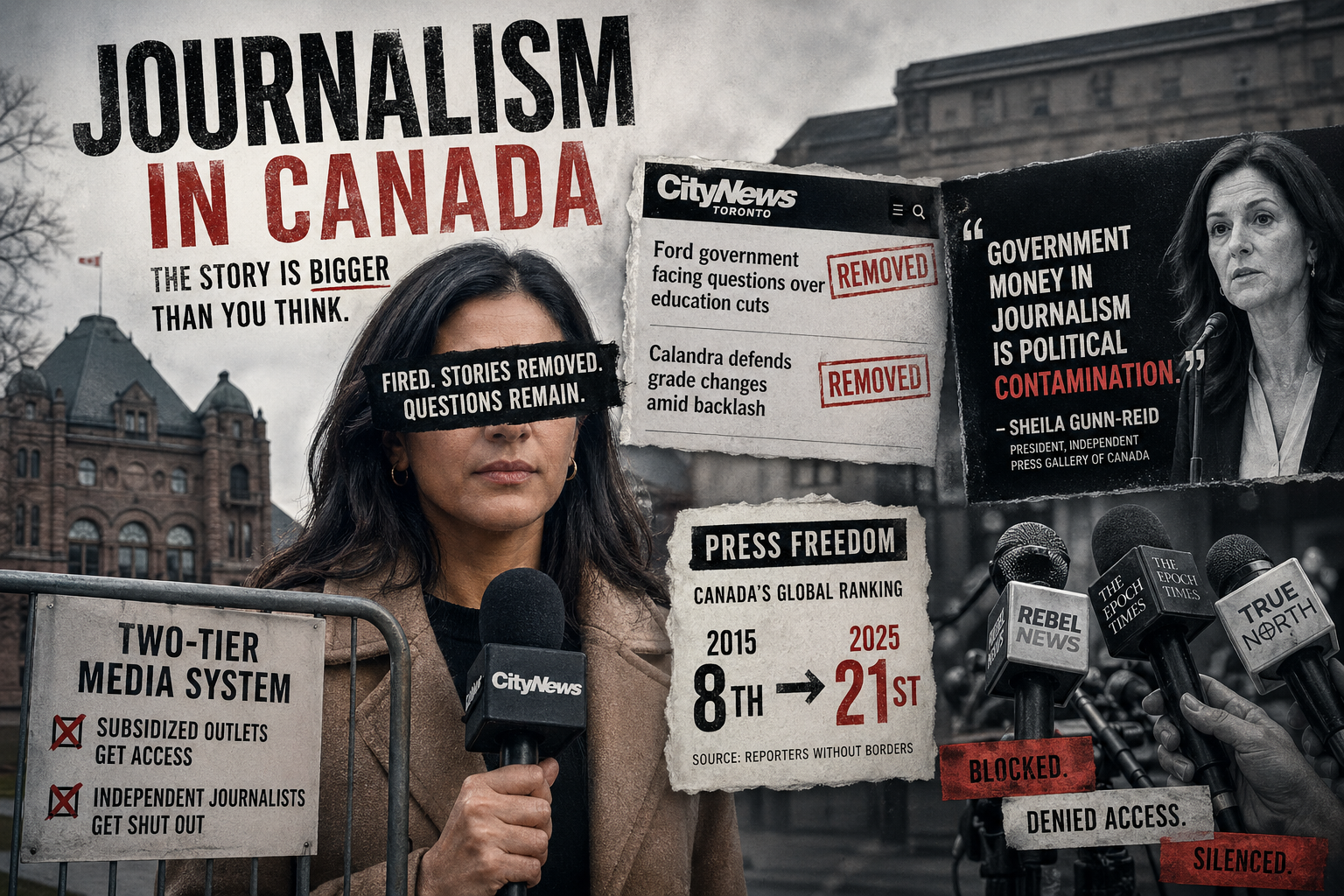
On April 13th, CityNews Queens Park reporter Tina Yazdani sent out a tweet. It said she was no longer employed by CityNews, that she stood by her reporting and that she would have more to say later. The tweet got a million views.
Yazdani had been covering Ontario politics for CityNews since 2018. By most accounts, she was tough but fair, which if you know anything about journalism, is about the highest compliment you can pay a reporter. She was terminated without explanation.
What made this story bigger than a routine media industry layoff was what happened alongside her firing. At least two of her stories about the Ford government quietly disappeared from the CityNews website with no explanation. One of them included an on-camera exchange with Education Minister Paul Calandra that, by all accounts, was pointed but legit journalism. The next day, she covered the provincial budget. That was her last on-air appearance.
The dots aren’t hard to connect, even if we can’t say with certainty what happened. But it’s worth noting that the Ford government reportedly spends about $100 million a year on advertising with media outlets. Whether that kind of financial relationship creates pressure, conscious or otherwise, on editorial decisions is a question worth asking. And the fact that two stories critical of that same government vanished from the CityNews website the same week their Queens Park reporter was fired is curious to say the least.
What I will say is this: a journalist asking uncomfortable questions of a government spokesperson isn’t a problem. It’s actually the job. And the spokesperson's job, in turn, is to stay composed, stay on message and not take the bait. That’s what media training is for. The fact that it apparently escalated to the point where someone, somewhere, allegedly made a phone call, tells you something went wrong long before any of this became public.
The Bigger Picture
On the same episode of the pod, we played opening remarks from Sheila Gunn-Reid, president of the Independent Press Gallery of Canada, delivered to a Heritage Committee meeting on April 16th. Whatever you think of Rebel News, her remarks were measured, specific and damning. She described a two-tier media system in Canada where government-subsidized outlets get preferred access and independent journalists get turned away, blocked from press conferences, denied accreditation and, in some cases, have police called on them simply for asking questions in public spaces.
Her best line, and I think it deserves to be repeated: “Government money in journalism is political contamination.”
She’s not wrong. When a news organization depends on government subsidies to survive, the incentive to hold that government to account is quietly, gradually compromised. It doesn’t have to be a phone call or a directive. It just…happens. And year by year, the temperature in the pot goes up just enough that nobody notices until the frog is cooked.
According to Reporters Without Borders, Canada has fallen from eighth place in global press freedom in 2015 to 21st in 2025. Not great.
What This Means for Anyone Who Deals with the Media
I have been training executives and spokespeople for three decades. I’ve watched the Canadian media landscape change dramatically over that time. There are fewer reporters covering more ground with less resources and, in some cases, less editorial independence than there used to be. That changes the dynamic of the media interview in ways that are not always obvious.
It means the reporters who are left are often more overworked, under more pressure and sometimes more aggressive because they have to be. It means the outlets doing the most tenacious accountability journalism are increasingly independent, underfunded and operating outside the traditional structures. And it means that the lines between journalism, advocacy and entertainment are blurrier than they have ever been.
None of that makes media training less important. If anything, it makes it more important. Because the media environment your spokespeople are stepping into is more unpredictable, more fragmented and less forgiving than it was even five years ago.
Prepare accordingly.
Warren Weeks is Canada's most experienced media trainer, based in Toronto, Ontario. He co-hosts the Reputation Town podcast with John Perenack. New episodes drop monthly wherever you get your podcasts.