Crisis Communications Training
A crisis doesn’t care about your calendar. It arrives without warning, moves faster than most organizations are prepared for and puts your leadership under a level of pressure that is genuinely difficult to simulate. In those first critical hours, the decisions your team makes, including what they say publicly and how they say it, will shape your organization's reputation for a very long time.
This isn’t a media training session with a crisis angle attached. It’s a comprehensive crisis response program built around everything a real crisis demands, from the war room to the camera.

What Participants Will Learn
How to establish a crisis communications action plan (or audit your existing one),
What executives and media relations personnel need to be doing in those first few critical hours of a crisis,
How to use media relations to contain the situation and minimize speculation,
The value of transparency and how to properly convey it during a crisis,
Case studies of media relations in times of crisis,
How to anticipate the questions you'll be asked by a reporter during a crisis,
How to craft a compelling messages that will resonate with reporters,
What reporters are looking for and how to use that to your advantage,
Your 'rights' in a media interview and how to defend them,
How to prepare for a media interview, (print, radio and TV),
Threats to effective media relations and how to overcome them,
How to keep every media interview to about five minutes in length,
How to gain more control over your quotes that end up in the story,
Techniques for succeeding in media interviews in times of crisis
How social media has changed crisis communications, how it could impact your company and what you need to know,
And much more.
*Session content can be customized to accommodate any specific requirements or learning objectives.
DEPTH OF EXPERIENCE
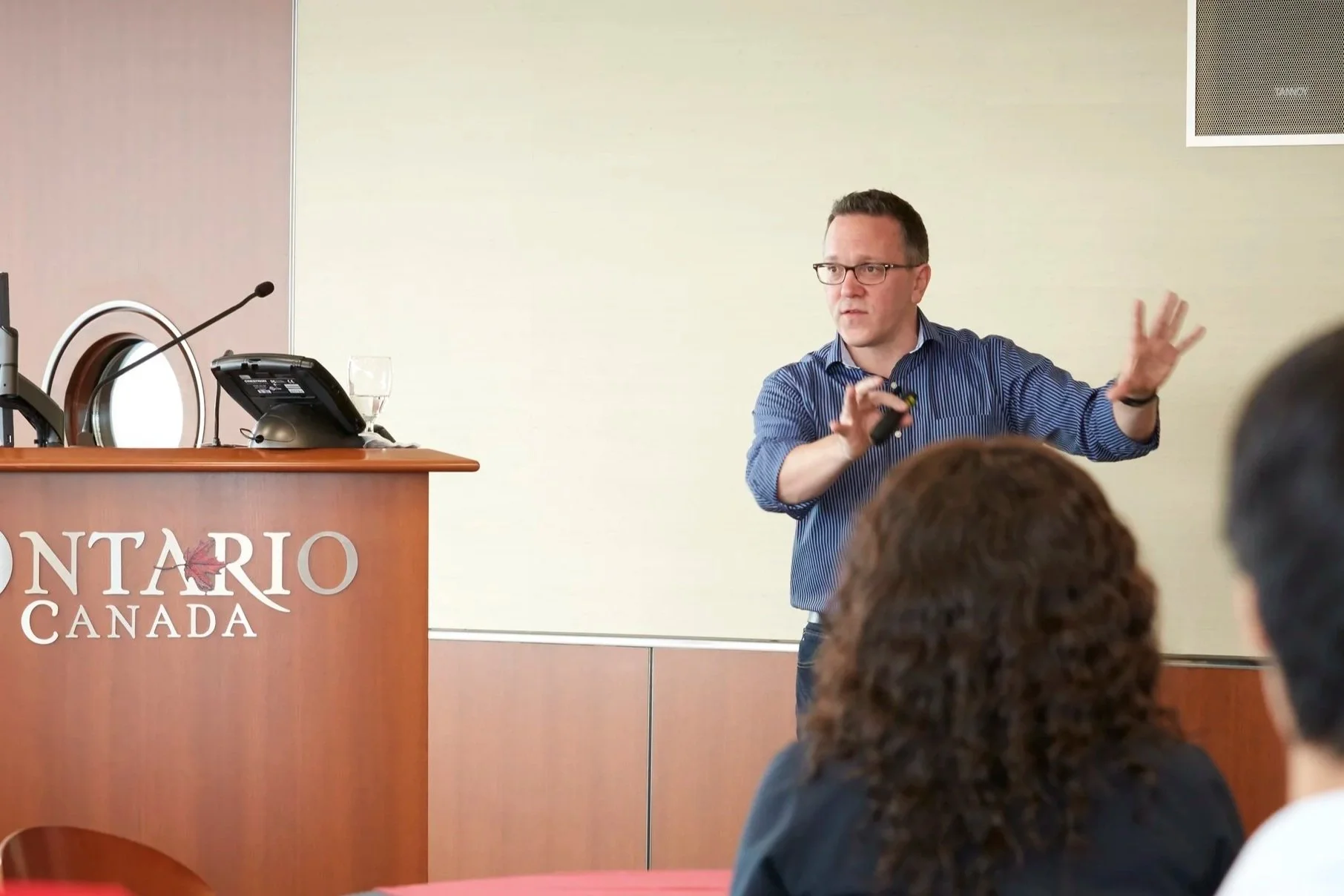
I’ve spent more than three decades working in crisis communications and I bring a level of real-world experience to this work that most trainers simply cannot offer. In the summer of 2000, I spent three-and-a-half months on the ground in Walkerton, Ontario during the community's devastating E. coli water contamination crisis, one of the most significant public health emergencies in Canadian history. Since then, I have advised organizations through bankruptcies, plant closures, food contaminations, work disruptions, mergers and acquisitions, leadership controversies and more.
I also co-host ‘Reputation Town’, a podcast I produce with my longtime friend and fellow communications veteran John Perenack, where we break down real-world crisis and reputation management stories from the headlines every week.
AGENDA
Every crisis communications session is structured around three core components, each customized to reflect the specific issues, risks and circumstances facing your organization:
Fight or Flight School: This is where we start. In this engaging, interactive and eye-opening presentation, participants learn how the fight or flight instinct shows up in a crisis, why it derails even experienced leaders and how to harness it and channel it into smart, effective action. We work through a proven formula for crisis management, drawing on real case studies from some of Canada's and the world's most significant corporate and institutional crises. Participants leave this portion of the session with a clear framework they can apply immediately.
Hypothetical Crisis Scenarios and Message Development: Each participant receives a detailed, customized crisis scenario built around issues that could realistically impact their organization. Working as a group, participants craft their key messages and holding statements, read them aloud, stress-test them and sharpen them before the cameras come out. This is where theory meets reality.
Simulated Media Interviews: Each participant conducts simulated media interviews in print, radio and/or TV formats, led by veteran journalists under exceedingly realistic conditions. Every interview is followed by detailed verbal and written feedback tailored to each individual participant.
Contact us for more information or to request a proposal